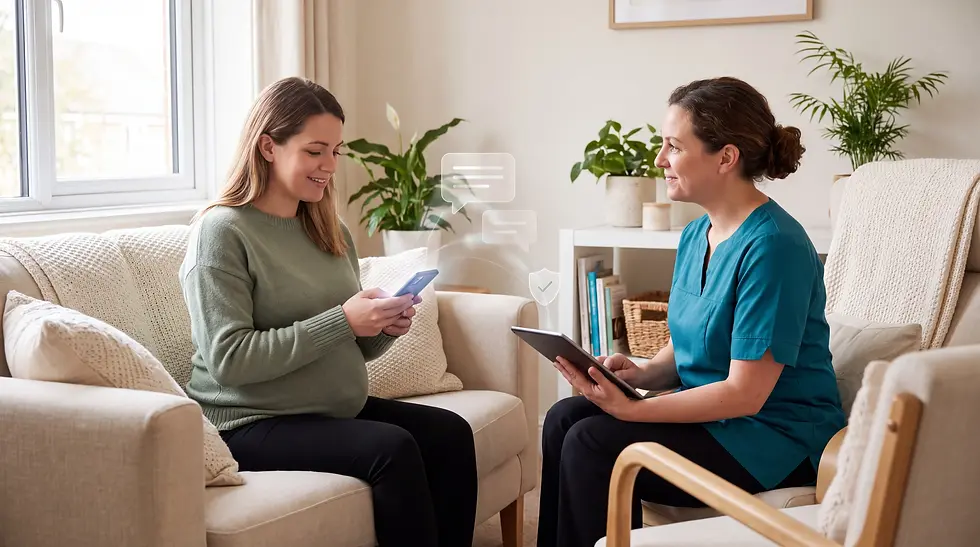
How Optometry Offices Use Text Messaging to Fill Appointment Slots


Empty appointment slots are one of the most common frustrations in any optometry practice. A patient no-shows without warning. Someone cancels the morning of their exam. A last-minute opening sits on the schedule with no easy way to fill it.
Phone calls take time, and most people do not answer numbers they do not recognize. Emails often go unread for hours. But a text message? Most people open it within three minutes.
That is why more optometry offices are turning to text messaging as their go-to tool for keeping schedules full, reducing no-shows, and staying connected with patients throughout the year.
This guide covers exactly how it works and what you can do starting today.
Why Text Messaging Works So Well in Optometry
Optometry patients are not sick. They do not feel urgency about their eye appointment the way they might about a medical concern. That makes them far more likely to forget, push it off, or cancel on short notice.
A well-timed text puts the appointment back in front of them at the right moment. It is fast to read, easy to respond to, and does not require the patient to call your office or navigate an app.
Studies consistently show that SMS has an open rate of around 98%, compared to roughly 20% for email. For a busy front desk team that needs to confirm dozens of appointments daily, that difference has a real impact on your schedule.
Text messaging also works well because it meets patients where they already are. Most people check their phones constantly. A quick reminder or a one-tap confirmation request fits naturally into their day.
1. Appointment Reminders That Stop No-Shows Before They Happen
The most common use of text messaging in optometry offices is the appointment reminder. Instead of making reminder calls the day before, practices automate a text that goes out at a set time, such as 48 hours before and again the morning of.
A simple reminder might look like this:
"Hi Sarah, this is a reminder about your eye exam at [Clinic Name] tomorrow at 2:00 PM. Reply YES to confirm or CANCEL to let us know if plans have changed."
When patients can confirm with one word, they actually do it. And when they cancel, you find out with enough time to offer the slot to someone else.
This one practice alone can cut no-show rates significantly. Some offices report dropping from a 15% no-show rate to under 5% just by switching from phone calls to automated text reminders.
For more on how text reminder tools work for healthcare practices, see this overview of text reminder software for businesses.
2. Last-Minute Cancellation Alerts to a Waitlist

Even with good reminders, same-day cancellations happen. The question is how fast you can fill the slot.
Calling through a paper waitlist takes time. But if you have a short list of patients who have expressed interest in earlier appointments, a single text blast can fill that slot in minutes.
Here is how it works: when a patient cancels, your front desk sends a short message to two or three people on the waitlist.
"Hi James, we just had a 3:00 PM opening today at [Clinic Name]. First to reply gets the spot. Want it?"
The speed of SMS means you can fill a slot even with just an hour or two of notice. That time window is too short for email, but it is more than enough for text.
This is one of the highest-value uses of SMS for optometry offices because it turns a lost appointment directly into revenue.
3. Recall Campaigns for Annual Eye Exams

Most patients are due for an eye exam every year, but very few of them remember to book it themselves. If your practice is not reaching out proactively, those patients quietly move on or simply delay indefinitely.
A recall campaign is a scheduled text that goes out when a patient is coming up on their annual exam window. It is automated, personalized, and takes the guesswork out of tracking who needs to come back in.
A recall message might look like this:
"Hi [First Name], it has been almost a year since your last visit with us at [Clinic Name]. Keeping up with your annual eye exam helps protect your long-term vision. Book your next appointment here: [link]"
Recall campaigns fill your schedule weeks in advance rather than scrambling to fill slots day by day. They also improve patient retention because patients feel like your office is looking out for them.
For a broader look at how healthcare practices use patient communication, this healthcare marketing strategies guide covers a range of approaches that work alongside texting.
4. Two-Way Texting for Quick Confirmations and Rescheduling

Many optometry practices make the mistake of sending one-way texts that patients cannot reply to. That creates friction. If a patient wants to reschedule, they have to call the office, go on hold, and speak with someone.
Two-way texting removes that barrier. When patients can reply directly to a text, they are far more likely to actually communicate with your practice rather than just not showing up.
With two-way texting, your front desk can manage multiple conversations at once from a shared inbox. A patient who wants to move their appointment from Tuesday to Thursday can do it in a 30-second text exchange that neither side finds annoying.
This works especially well for:
Patients who work during business hours and cannot easily make a phone call
Patients who feel awkward making calls to cancel
Practices that want to reduce hold times and phone volume
The easier you make it for patients to communicate with you, the less often they simply go quiet.
5. Same-Day Opening Notifications

Some offices go one step further and set up a subscriber list specifically for patients interested in short-notice appointments. This is particularly useful for practices that see a lot of walk-in interest or have patients who prefer earlier time slots when they become available.
When a same-day opening appears, a quick message goes out:
"Good morning! We have an unexpected opening at [Clinic Name] this afternoon at 1:30 PM. If you would like to grab it, reply now."
Patients on this list have opted in because they genuinely want these notifications. That means your message is welcome rather than intrusive, and the response rate is high.
This approach works well for practices with a growing patient base where demand often exceeds same-day capacity.
6. Post-Visit Follow-Ups That Bring Patients Back
Text messaging does not only help fill today's appointment. It also plays a role in making sure patients return next year.
A quick follow-up message after a visit can serve a few purposes at once. It checks in on how the patient is doing, reminds them to pick up any ordered products, and subtly reinforces that your office values the relationship.
"Thanks for coming in today, [First Name]. If your new prescription does not feel quite right in the first few days, do not hesitate to reach out. We are happy to help."
A message like that takes seconds to read and leaves a lasting impression. Patients who feel cared for after their visit are far more likely to rebook and to refer others.
You can also use follow-up texts to request reviews or complete feedback surveys. A patient who just had a good experience is the most likely to leave a positive review, and a text with a direct link removes the effort barrier that usually stops people from doing it.
What Optometry Offices Need to Know About HIPAA Compliance
Before setting up a text messaging system for your optometry practice, it is important to make sure you are handling patient data correctly.
Any text that includes protected health information, such as a patient's name along with appointment details or diagnosis-related content, needs to be handled in a way that is consistent with HIPAA guidelines. This means using a platform that offers a Business Associate Agreement (BAA) and encrypts messages appropriately.
You should also get clear patient consent before sending texts. Most practices do this at intake by adding a simple checkbox to their new patient forms.
For a deeper look at HIPAA-compliant messaging in healthcare settings, this article on HIPAA-compliant texting covers the core requirements that apply to healthcare providers broadly.
You can also explore Falkon SMS's approach to secure SMS messaging for healthcare teams.
What to Look for in a Texting Solution for Your Optometry Office
Not all texting platforms are built for healthcare. When evaluating options, here are the things that matter most for an optometry practice:
HIPAA compliance. Your platform should sign a Business Associate Agreement and handle patient data securely. This is non-negotiable.
Two-way messaging. Patients need to be able to reply. One-way broadcast tools are not enough for managing appointments.
Automation. Look for a platform that can schedule reminders, recalls, and follow-ups automatically, so your front desk is not manually sending texts all day.
Shared inbox. If multiple staff members handle patient communication, a shared team inbox keeps things organized and ensures nothing falls through the cracks.
Ease of use. A complicated tool that requires extensive training will not get used consistently. The simpler, the better.
Integration. If your practice uses an EHR or scheduling system, look for a platform that can connect with it or at least allow easy manual import of patient lists.
Falkon SMS is a business texting platform that works well for small and mid-sized healthcare practices, including eye care offices. It offers two-way texting, automated reminders, a shared team inbox, and HIPAA-ready infrastructure. For a broader view of how SMS works across healthcare, see the healthcare SMS overview and the full list of platform features.
For a sense of how similar practices have put these tools to work, the use cases for healthcare texting article walks through real-world examples across several practice types.
Putting It All Together
Optometry offices that use text messaging consistently tend to see fewer no-shows, faster turnaround on last-minute openings, better recall rates, and stronger patient retention overall.
None of these outcomes require a complicated setup.
The workflow is straightforward: automated reminders go out before every appointment, a waitlist gets a text when a slot opens up, recall messages go to patients nearing their annual exam window, and patients can respond to any of these messages directly.
The technology does the heavy lifting. Your front desk stays focused on the patients who are actually in the office.
Text messaging will not solve every scheduling challenge on its own. But as a tool for keeping your calendar full and your patients connected, it is one of the most cost-effective options available to a modern optometry practice.
Frequently Asked Questions
Q: How do text reminders help fill appointment slots in optometry?
Text reminders prompt patients to confirm or cancel their appointments in advance. When a patient cancels early, your team has time to reach out to other patients on a waitlist or recall list. This turns potential gaps in your schedule into filled appointments.
Q: What types of texts do optometry offices send?
Most optometry offices send appointment reminders, confirmation requests, cancellation notices, annual recall messages, same-day opening alerts, post-visit follow-ups, and product pickup reminders.
Q: Is it legal to text patients their appointment details?
Yes, but you need patient consent and the right platform. Any text that includes a patient's name along with health-related details must comply with HIPAA. Using a HIPAA-compliant texting platform and obtaining patient opt-in at intake covers the main requirements.
Q: How far in advance should appointment reminders be sent?
Most practices send one reminder 48 hours before the appointment and another the morning of. This gives enough advance notice for patients to reschedule if needed while still being close enough to be relevant.
Q: Can small optometry offices afford a texting platform?
Yes. Many business texting platforms offer plans suitable for small practices, often starting at a low monthly fee. The time savings from fewer phone calls and the revenue recovered from filled slots typically make the cost easy to justify.
Q: What is a recall campaign in optometry?
A recall campaign is an automated sequence of text messages sent to patients who are due for their annual eye exam. It goes out based on the date of their last visit and includes a booking link or call to action that makes scheduling easy.
Q: How many texts should I send before it feels like too much?
For appointment-related messages, one reminder 48 hours out and one the same morning is a common and well-tolerated cadence. For recall messages, one outreach per year per patient is usually enough. Always make opt-out easy.
Q: Do two-way texts really reduce no-shows?
Yes. When patients can respond to a reminder with a simple word to confirm or reschedule, they are far more likely to engage than if a text is one-way. Two-way texting also catches last-minute issues before they turn into silent no-shows.
Ready to Fill More Appointment Slots?
If your practice is still relying on phone calls and emails to manage your schedule, there is a good chance you are losing appointments you could have kept.
Falkon SMS helps optometry offices set up automated reminders, two-way texting, and recall campaigns quickly, without complex software or a long onboarding process. It is built for teams that want results without the hassle.
Book a quick meeting with the Falkon SMS team to see how it works and whether it is the right fit for your practice. Most offices are up and running within a day.