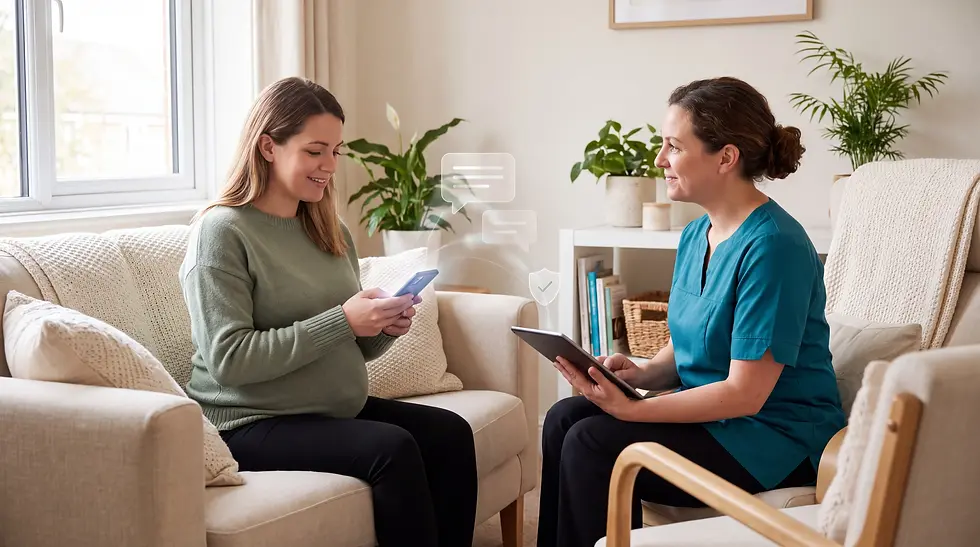
Why ABA Therapy Providers Should Use Texting to Communicate With Families


Parents raising a child in Applied Behavior Analysis (ABA) therapy are juggling a lot. Between session schedules, insurance paperwork, school coordination, and behavior strategies to reinforce at home, a missed phone call or an email buried in a crowded inbox can mean a missed session or a stalled treatment plan. For ABA therapy providers, how a practice communicates with families matters almost as much as the therapy itself.
Text messaging has quietly become the fastest way to reach almost anyone. Industry research on SMS marketing statistics shows that text messages are opened at rates between 90 to 98%, compared with roughly 20 to 30% for email, and most are read within minutes of arriving. For an ABA therapy practice trying to confirm tomorrow's session, remind a caregiver about a homework strategy, or flag a schedule change, that speed is hard to replace.
This article looks at why ABA therapy providers should use texting, what it can and should not be used for, how HIPAA fits into the picture, and how a practice can start texting caregivers securely.
What Is ABA Therapy Texting
ABA therapy texting is the use of text messaging, typically through a secure business texting platform rather than a personal cell phone, to communicate with caregivers, family members, and sometimes other members of a client's care team. It covers everything from appointment reminders and cancellation notices to quick check-ins between sessions and shared reminders about behavior strategies.
The key difference between ABA therapy texting and simply texting from a personal phone is compliance. Because ABA therapy communication often touches protected health information (PHI), such as a child's diagnosis, treatment goals, or behavior data, the platform used for texting needs to meet HIPAA's requirements for protecting that information.
How Texting Differs From Phone Calls and Emails in ABA Practices
Phone calls require both people to be free at the same time, which is difficult when RBTs are moving between sessions and caregivers are at work or managing other children. Voicemails often go unheard for hours. Email is asynchronous, but it tends to get buried under newsletters and notifications, and many people simply do not check it as often as they check their phone.
Texting solves both problems. It does not require both parties to be available at once, and it lands in a channel people check constantly throughout the day. For a busy ABA therapy practice, that combination of speed and convenience is difficult to match with calls or email alone.
Why Communication Is So Challenging for ABA Therapy Providers
ABA therapy depends on more caregiver coordination than most other therapy types. Parents are expected to reinforce strategies at home between sessions, coordinate with schools, and often work with a rotating group of registered behavior technicians (RBTs) and a supervising board certified behavior analyst (BCBA).
Staff turnover adds another layer of difficulty. According to the Behavior Analyst Certification Board, the organization that certifies RBTs and BCBAs, direct care staffing shortages and turnover remain persistent challenges in the field. Industry estimates on annual RBT turnover vary by source, but several put the figure somewhere between 30 and 75%, and some larger, multi-location organizations report numbers well above that. Every time a technician leaves, someone has to rebuild rapport with the family and get caught up on where communication left off.
Sessions also happen across home, clinic, school, and community settings, which means staff are frequently in transit, in session, or otherwise unavailable to take a call. And because so much of what is discussed relates to a child's diagnosis and treatment, providers cannot simply default to whatever channel is most convenient. Every one of these factors makes fast, secure, asynchronous communication more valuable in ABA therapy than in many other fields.
The Core Reasons ABA Therapy Providers Should Use Texting
Texting will not replace phone calls, session notes, or a practice management system, but it fills a specific gap that those tools cannot cover as well. Here is where it tends to make the biggest difference.
Text Messages Get Seen and Answered Faster
SMS open rates regularly land between 90-98%, and most messages are read within three to five minutes of being sent, based on healthcare texting statistics compiled across multiple industries. Response rates follow a similar pattern, with SMS averaging around 45% compared with roughly 6% for email.
For an ABA therapy practice, that speed matters most in moments that cannot wait for a callback, like a same-day cancellation, a sudden schedule change, or a caregiver who needs to flag a behavior escalation before the next session.
Fewer Missed Sessions and Last Minute Cancellations
Missed sessions are costly on every level. They interrupt the consistency that ABA therapy depends on, and pediatric outpatient no-show rates are commonly cited around 24%, with some telehealth ABA programs reporting cancellation rates as high as 30%.
Automated or manual appointment confirmation texts sent a day and an hour before a session give caregivers an easy way to confirm, reschedule, or flag a conflict before it turns into a no-show. Practices that pair clear reminders with their scheduling process tend to see fewer gaps in a child's treatment plan.
Faster Two-Way Communication Between Sessions
A lot of useful information surfaces between sessions rather than during them, such as a new behavior at home, a question about a strategy, or a request to move a session by twenty minutes. Two-way texting lets caregivers send that information the moment it happens rather than waiting for the next scheduled call.
This also reduces how often a parent resorts to texting a technician's personal number out of convenience, which is a compliance risk that providers want to avoid entirely.
Better Support for Caregiver Training and Carryover
Progress in ABA therapy depends heavily on what happens outside of sessions. When caregivers are coached to reinforce specific strategies at home, a short text reminder, phrased at a high level and without sensitive clinical detail, can reinforce that coaching in the moment it is needed rather than days later at the next appointment.
Less Strain on Front Desk and Administrative Staff
Every phone call that goes to voicemail becomes a callback, and every callback that goes to voicemail becomes another callback. Texting breaks that cycle. One administrator can send reminders, confirm rescheduling requests, and answer quick questions for several families in the time it typically takes to work through one phone tree.
Keeping Multiple Caregivers and Team Members in the Loop
It is common for a single client to have several people involved in their care, such as two parents, a grandparent, or a nanny, plus a supervising BCBA who wants visibility into what is being discussed. A texting platform that supports shared inboxes or broadcast messages, with proper consent, keeps everyone working from the same information instead of relying on one person to relay updates.
A Documented Communication Trail for Compliance and Continuity
Because RBT turnover is so common in this field, a written record of prior conversations helps a new technician or supervisor get up to speed quickly instead of starting from zero with a family. It also gives practices a clear, searchable record to fall back on if a compliance question ever comes up, which is far more reliable than trying to reconstruct a phone conversation from memory.
See How HIPAA Compliant Texting Works for Mental Health Centers
Falkon SMS offers secure two-way texting built for healthcare and mental health centers, so your team can message caregivers without putting PHI at risk.
Is Texting HIPAA Compliant for ABA Therapy
Texting can be HIPAA compliant for ABA therapy, but only when it happens through a platform built for healthcare communication rather than a personal phone or a standard consumer messaging app. HIPAA compliant texting requires encryption, access controls, audit trails, and a signed Business Associate Agreement (BAA) between the practice and the texting vendor.
Standard SMS sent from a personal cell phone is not HIPAA compliant on its own, and neither are consumer apps like iMessage, WhatsApp, or Google Voice, even though they may feel secure to use. The same applies to classroom-style apps built for school communication, which typically do not offer a BAA. ABA therapy is a covered medical treatment, and conversations about diagnoses, treatment goals, and behavior data count as protected health information under HIPAA, so the platform used to send them needs to meet that bar. For more detail on where the lines are drawn, see this guide to HIPAA texting dos and don'ts.
According to the U.S. Department of Health and Human Services, HIPAA sets the federal standard for how covered entities and their business associates must protect patient health information, and that standard applies to every communication channel a practice uses, texting included. For a closer look at when a message actually needs to go through a compliant channel, see our guide on whether you need a BAA to text patients.
What Makes a Texting Platform HIPAA Compliant
A signed Business Associate Agreement between the practice and the vendor
Encryption of messages in transit and at rest
Role based access controls so only authorized staff can view specific conversations
Audit logs that record who sent, read, or deleted a message
Secure message retention and archiving that meets record keeping requirements
The ability to keep sensitive details, such as a full behavior plan, out of the text itself and instead shared through a secure link or portal
What ABA Providers Should Avoid
Texting clinical details from a personal cell phone
Relying on consumer apps such as iMessage, WhatsApp, or standard Google Voice for PHI
Using classroom communication apps for anything beyond non-clinical logistics like attendance
Skipping a signed BAA because a vendor claims to be secure without formally offering one
For a broader comparison of options built specifically for behavioral health and therapy practices, see this roundup of HIPAA compliant texting for therapists and this list of the best HIPAA compliant texting platforms available in 2026.
Common Use Cases for Texting in ABA Therapy Practices
Once a practice has a HIPAA compliant platform in place, texting tends to show up across nearly every part of day to day operations. Common examples include
Appointment reminders and same-day confirmations
Session cancellations and quick rescheduling
Caregiver check-ins between sessions
High level updates on behavior strategies, without sensitive clinical detail
Secure links to intake forms, consent forms, or a caregiver portal
Coordination with schools or other providers, with proper consent on file
Staff scheduling and last minute shift coverage among RBTs and BCBAs
Billing reminders and insurance authorization updates
Weather closures, office schedule changes, or holiday hour notices
How ABA Therapy Providers Can Start Using HIPAA Compliant Texting
Choose a texting platform built for healthcare, with a signed BAA, encryption, and audit logs, and one that supports texting from your practice's existing business number so staff are not learning a new number for every client.
Get documented consent from caregivers before texting them, and be upfront about what will and will not be discussed by text.
Set clear internal guidelines for staff on what belongs in a text message versus what requires a phone call, a portal message, or an in-person conversation.
Train RBTs, BCBAs, and administrative staff on the platform, including how to keep sensitive details out of message content.
Connect the platform to your practice management or scheduling system where possible, so reminders and confirmations happen automatically rather than manually.
Review message logs periodically as part of your regular compliance process, the same way you would review other patient communication.
Choosing the Right Texting Platform for Your ABA Practice
Not every business texting tool is built for healthcare. When evaluating options, ABA therapy providers should treat a signed BAA as non-negotiable, and also look for two-way texting from a dedicated business number, straightforward tools that non-technical staff can pick up quickly, support for shared or group conversations with proper consent, and secure SMS infrastructure with transparent pricing that scales with the size of the practice.
Platforms such as Falkon SMS are built as HIPAA compliant texting solutions with signed BAAs and are used across healthcare and care related industries, including IDD and behavioral health providers, for this kind of caregiver communication. Whichever platform a practice chooses, the priority should be the same, secure two-way texting that fits naturally into how families already communicate.
Frequently Asked Questions
Can ABA therapy providers legally text parents?
Yes. ABA therapy providers can legally text parents and caregivers as long as any message containing protected health information goes through a HIPAA compliant platform with a signed Business Associate Agreement. Texting about non-clinical logistics, like confirming an address, generally carries less risk, but many practices choose to keep all client communication on a single compliant platform to stay consistent.
Is standard SMS from a personal phone HIPAA compliant for ABA therapy?
No. Standard SMS sent from a personal cell phone does not meet HIPAA's requirements for encryption, access controls, or audit logging, and personal phone carriers will not sign a Business Associate Agreement. Any texting that touches a client's health information needs to go through a dedicated HIPAA compliant platform instead.
What should never be sent by text in ABA therapy?
Full diagnostic reports, detailed behavior data, and complete treatment plans are generally better shared through a secure portal or discussed during a scheduled conversation rather than sent by text. Texting works best for brief, high level updates and logistics, with sensitive clinical detail reserved for more controlled channels.
How does texting help reduce missed ABA therapy sessions?
Text reminders reach caregivers quickly and are typically read within minutes, which gives families an easy way to confirm, reschedule, or flag a conflict before a session is missed entirely. Pediatric no-show rates are often cited around 24%, and consistent reminder texts are one of the more effective ways providers bring that number down.
Do parents prefer texting over phone calls or email?
Most consumers say they would rather receive a text from a business than a phone call, and industry data puts SMS response rates well above email response rates. For busy caregivers managing a child's therapy schedule alongside work and other responsibilities, texting tends to fit into their day more easily than a scheduled call.
What is a Business Associate Agreement and why does it matter for ABA texting?
A Business Associate Agreement, or BAA, is a contract required under HIPAA between a healthcare provider and any vendor that handles protected health information on its behalf. If a texting platform will not sign a BAA, it is not appropriate for HIPAA compliant communication, regardless of how secure its marketing claims to be.
Can ABA practices text multiple caregivers about the same client?
Yes, as long as the platform supports group or shared conversations securely and each caregiver has agreed to be included. This is useful for families where more than one parent, guardian, or caregiver needs the same updates.
How much does HIPAA compliant texting cost for a small ABA practice?
Pricing varies by vendor and typically depends on the number of users, phone numbers, and messages sent each month. Smaller ABA practices can often start with a modest monthly plan and scale up as their caregiver messaging volume grows. Check a vendor's pricing page directly for current plans.
Key Takeaways
ABA therapy communication is uniquely demanding because of heavy caregiver involvement, high staff turnover, and the sensitivity of the information involved
Texting reaches families faster than phone calls or email and gets far higher response rates
Text reminders help reduce missed sessions and last minute cancellations
Any texting that touches protected health information needs a HIPAA compliant platform with a signed BAA
Common use cases range from appointment reminders to caregiver check-ins to staff scheduling
Choosing the right platform, and setting clear guidelines for what to text versus what to call about, sets a practice up to use texting safely and effectively
Texting will not replace the clinical relationship at the center of ABA therapy, but it removes a lot of the friction around getting basic information to and from families quickly. For providers still relying only on phone calls and email, secure texting is one of the more straightforward operational upgrades available.
Ready to Add Secure Texting to Your ABA Practice
Connect with the Falkon SMS team to set up HIPAA compliant texting with a signed BAA, built for behavioral health and therapy providers.